Israel Holds Elections With No Bloc Expected to Secure Majority
Final polls show the opposition and Prime Minister Netanyahu’s camp both falling short of the 61 seats needed for control, setting the stage for complex coalition negotiations.
By Fatima Popov ·
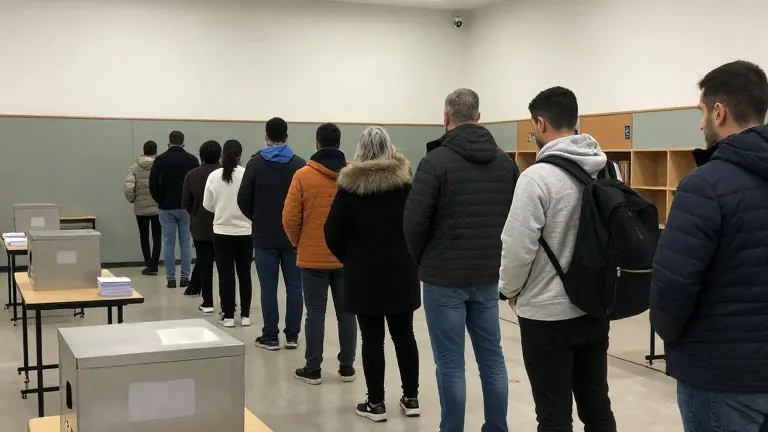
Israeli voters cast ballots on Tuesday in the first legislative election since the October 7, 2023 attacks. The vote determines the composition of the 120-seat Knesset and will shape the government’s approach to ongoing conflicts and internal political divisions. No single coalition is expected to win an outright majority, meaning the result will likely depend on post-election negotiations between rival blocs.
The political landscape is defined by two main contenders. Prime Minister Benjamin Netanyahu leads a right-wing coalition that includes his Likud party, the ultra-Orthodox United Torah Judaism and Shas, and the far-right Otzma Yehudi and Religious Zionism-Zehut. The opposing bloc unites four secular and centrist movements: Gadi Eisenkot’s Yashar, Yair Golan’s Democrats, Avigdor Lieberman’s Yisrael Beiteinu, and the Together alliance, which now includes opposition leader Yair Lapid.
Polling data released before a publication ban took effect on Friday indicated that neither side would reach the 61 seats required for a majority. A survey by public broadcaster KAN projected 52 seats for the opposition alliance and 50 for Netanyahu’s camp. The remaining seats are expected to go to unaffiliated groups, primarily the two major Arab lists, Ra’am and the Joint List. Both major coalitions have signaled they are unlikely to partner with these Arab-led parties immediately, increasing the chance of a minority government or a repeat election.
Voters are weighing the election against a backdrop of domestic frustration and international scrutiny. Many citizens demand accountability for security failures prior to the 2023 attacks and are critical of the military exemption granted to the ultra-Orthodox community. Opposition figures, including International Crisis Group analyst Mairav Zonszein, view the vote as a critical moment to preserve Israel’s liberal democratic institutions against Netanyahu’s judicial reform agenda.
The personal stakes for Netanyahu are high. As the country’s longest-serving leader, he faces corruption charges that have been in court since 2019. A defeat in the Knesset would weaken his position in those trials, where a conviction could lead to a prison sentence. He also operates under an International Criminal Court arrest warrant for war crimes.
Approximately 7.3 million Israeli citizens are eligible to vote, including 1.2 million Palestinian citizens of Israel. Turnout among this community is projected to reach 60 percent, potentially securing 15 seats for Arab parties. Campaigners are targeting a 70 percent turnout rate, which would mark the highest level in decades. The Central Elections Committee recently allowed the Joint List and Ra’am to run after the Supreme Court reversed a ban, though it did disqualify Balad leader Sami Abu Shehadeh over a published opinion.
Netanyahu has framed the election as a choice between his coalition and a potential alliance between his rivals and Arab parties. Joseph Mansour, a former aide to Knesset member Ayman Odeh, suggested this framing could allow Netanyahu to remain as a caretaker prime minister if no bloc achieves a majority. Meanwhile, roughly three million adult Palestinians in Gaza, the West Bank, and East Jerusalem remain without a direct vote in the government that controls their borders and legal status.
Source: Al Jazeera