Serbia's New Government Faces Domestic Repairs Before Shifting Foreign Policy
Experts predict gradual changes in ties with the EU, Russia, and neighbors after the opposition's victory over Aleksandar Vucic.
By Daniel Rogers ·
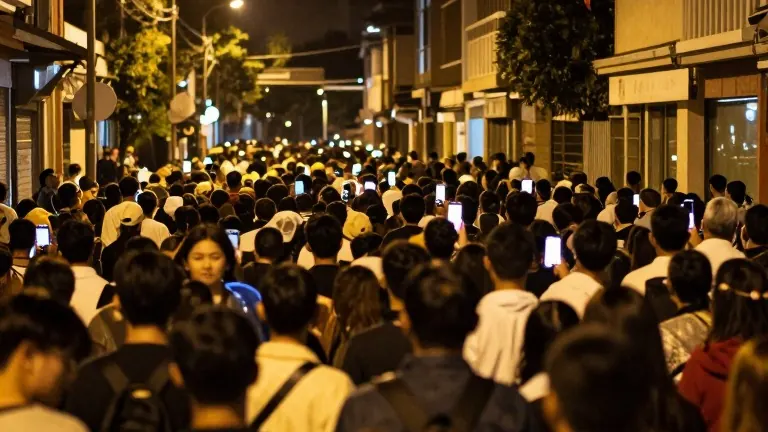
Fourteen years of continuous rule by Aleksandar Vucic and the Serbian Progressive Party ended Sunday with a historic election victory for the opposition Student List. The result marks a sharp break from the authoritarian governance that defined the previous decade and a half in Belgrade. While the win shifts power domestically, international observers question how quickly Serbia's external relationships will change.
The transition period begins immediately as the country prepares for presidential elections scheduled for December. Regional neighbors, including Bosnia and Herzegovina, Croatia, Montenegro, and Kosovo, watch closely. Relations with these states often deteriorated under Vucic due to nationalistic rhetoric and diplomatic friction. Analysts suggest the new leadership will focus on internal stability before attempting to reset regional dynamics.
Aleksandar Popov, director of the Centre for Regionalism in Novi Sad, argued that a rapid regional reset is unlikely. He stated that domestic issues take precedence, noting that the previous system captured democratic institutions, the judiciary, the prosecution service, the police, and the media. Popov explained that the new authorities must tidy up at home before solving problems with neighbors, despite the outgoing regime actively undermining regional ties. He noted that relations with Croatia remain tense, marked by frequent sharp words, while issues with Montenegro and Bosnia remain unresolved.
Popov identified Croatia as the most complicated case, citing clashes between the SNS and the Croatian Democratic Union. He described the previous political system as functioning on the production of internal and external enemies. Behind the public hostility, he argued that Belgrade and Zagreb shared quiet convergence on Bosnia and Herzegovina, with Belgrade supporting Republika Srpska leader Milorad Dodik and Zagreb favoring a third entity. Popov expressed hope that a government led by experts and civic leaders would repair damaged ties to revive EU integration hopes.
Vuk Vuksanovic, a lecturer in foreign policy at King’s College London, predicted that foreign policy would transform the least under the new government. He noted that many international and domestic structures shaping Serbian foreign policy will remain in place. Vuksanovic said Moscow never fully trusted Vucic but viewed him as the devil they knew. He argued that Russian influence will take a blow with the end of uncritical glorification in state media and downgraded intelligence cooperation, but the new government is unlikely to adopt a hawkish stance overnight.
Vuksanovic asserted that Serbian interests can continue to be served by ties with Russia, citing the need for preferential gas prices and the unresolved Kosovo dispute. He stated that the new government will not see value in joining EU sanctions. Regarding Ukraine, he predicted Serbia will maintain its policy of not recognizing the annexation of Crimea and Donbas, though a question mark hangs over ammunition deliveries. The opposition viewed Vucic’s weapons sales to Kyiv as a cynical ploy to buy Western tolerance for his domestic rule.
Bosko Jaksic, a foreign policy analyst, noted that ties with Israel will not be severed but will face scrutiny. He said the new government will re-examine newly concluded contracts, primarily concerning Serbian ammunition exports to Israel and Israeli surveillance equipment exports to Serbia. Jaksic added that how Israel positions itself toward Belgrade depends largely on the outcome of Israel’s own elections, as the Netanyahu government has lost another authoritarian, nationalist ally in Europe following Viktor Orban’s removal in Hungary earlier this year. He suggested that the policy of sitting on multiple chairs will be re-evaluated, with Belgrade realistically expected to strengthen ties with the EU.
Source: Al Jazeera