Wall Street Eyes Congress Amid AI Spending and Debt Ceiling Fears
As polls open for the 2026 midterms, Reuters reports that global markets are closely monitoring the potential impact of the election on fiscal policy and technology investment.
By Rebecca Kaminski ·

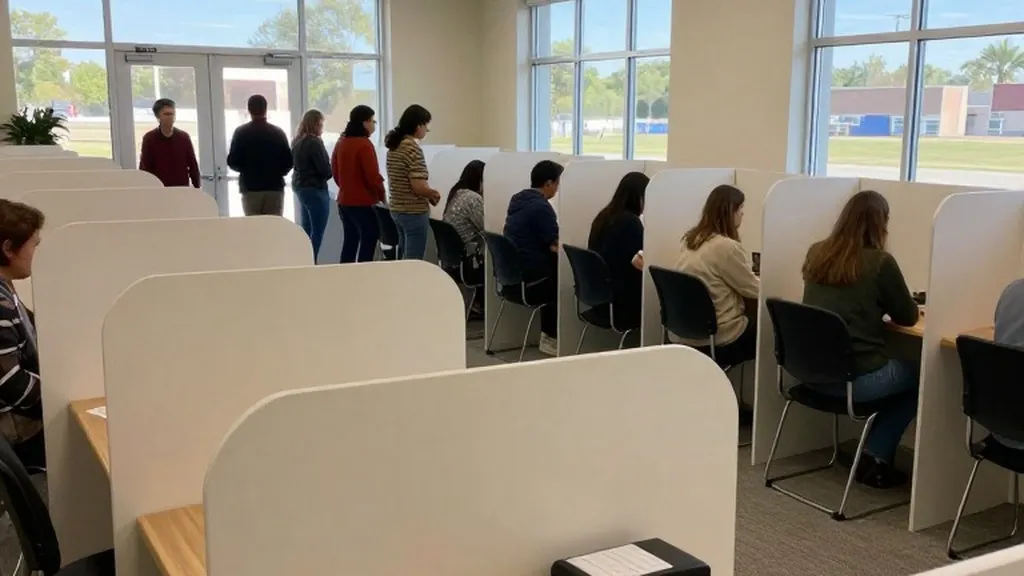
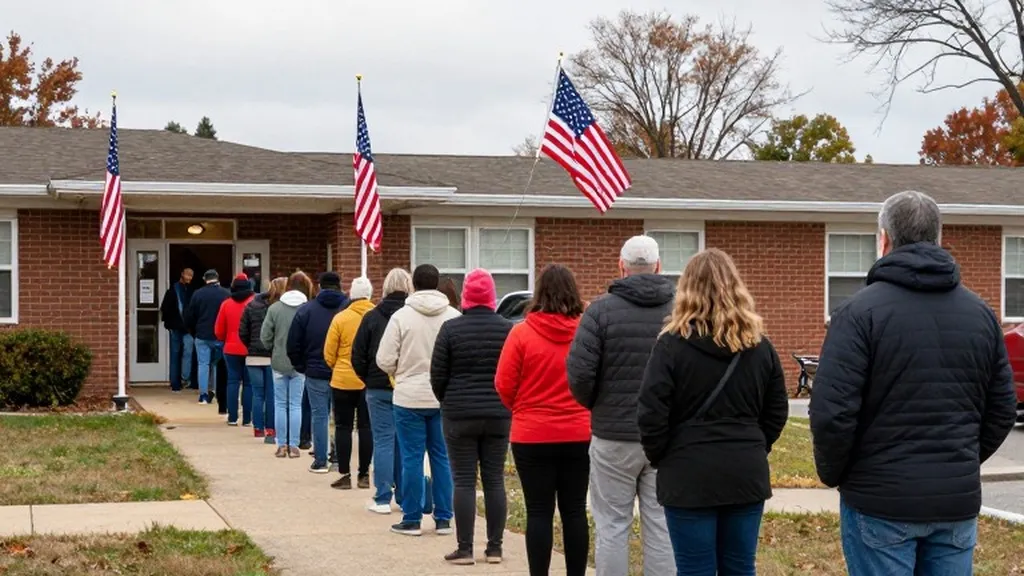
Polls opened across the United States on Tuesday, November 3, 2026, for the midterm elections that will determine the balance of power in Congress for the final two years of President Donald Trump's second term. While voters focus on local and national issues, financial markets are closely watching the outcomes for signals regarding fiscal discipline and the direction of major corporate investments. Reuters notes that results could add to existing investor concerns about artificial intelligence spending and upcoming debt ceiling negotiations.
The Associated Press describes the election as a referendum on the President's second term, with many voters struggling with high prices and expressing anger over an unpopular war with Iran. According to AP-NORC polling, 35 percent of U.S. adults approve of Trump's job performance, while about seven in ten say the country is heading in the wrong direction. Most respondents blame the President for high prices. This economic anxiety is a central theme in campaign messaging from both parties, with Democrats arguing that voters want change and Republicans emphasizing the need for high turnout to maintain stability.
Beyond the domestic mood, Wall Street is analyzing how a shift in congressional control might affect the federal debt ceiling. The administration and Congress are expected to face renewed negotiations on the debt limit soon. A change in party control could alter the pace and terms of these negotiations, creating uncertainty for bond markets and currency traders. Reuters highlights that investors are particularly sensitive to any signals of fiscal irresponsibility or prolonged government shutdowns, both of which are tied to the outcome of the House and Senate races.
The race for the U.S. House of Representatives involves all 435 seats. Republicans currently hold 218 seats, while Democrats hold 214, with one independent and vacancies. Democrats need a net gain of three districts to secure a majority, whereas Republicans can afford to lose no more than two. Ballotpedia identifies 46 battleground districts. In these closely watched areas, candidates are highlighting issues such as the cost of living and national security. The AP notes that one or two seats could tip the chamber, making the margin of victory a critical factor for market stability.
In the Senate, 35 seats are up for election. Republicans hold 53 seats, Democrats hold 45, and two independents caucus with Democrats. Democrats need a net gain of four seats to take control. Key battlegrounds include Georgia, Michigan, and Pennsylvania. The Associated Press reports that economic strain and tariffs have made states like Maine and Pennsylvania competitive. For investors, a unified government under either party could lead to different legislative agendas regarding taxation and regulation, which directly impacts corporate earnings and consumer spending forecasts.
Artificial intelligence spending is another major focal point for global markets. Tech giants are committing billions of dollars to data centers and model development. The AP notes that the 2026 elections will likely be the most expensive in history, with Republican committees outspending Democrats at the committee level, aided by Trump-affiliated groups. However, at the candidate level, Democrats have outraised their opponents. Market analysts are watching to see if a new congressional majority will support or scrutinize these massive private sector investments in AI infrastructure, which are seen as vital for long-term economic growth.
Trade policy and relations with allies are also under scrutiny. The President's administration has implemented tariffs that have raised costs for consumers and created friction with trading partners. Reuters indicates that trade is a significant factor in investor sentiment. A Democratic-controlled Congress might push for different trade agreements or oversight hearings, while a Republican Congress could align more closely with the administration's current stance. This uncertainty affects supply chains and the profitability of multinational corporations that rely on stable international trade relations.
Voters are heading to the polls with high stakes in mind. More than 57 million people had already voted as of Monday, surpassing early vote totals from four years ago in many states. The Associated Press reports that Republicans were bracing to lose the House but fighting to hold the Senate. Democrats are described as cautiously optimistic. The outcome will determine whether investigations and possible impeachment proceedings become likely, a scenario that could introduce political volatility into the market. House Democratic Leader Hakeem Jeffries has outlined a 100-day agenda on the cost of living and oversight if his party gains control.
The election also has implications for the 2028 presidential cycle. A strong Democratic night would boost potential candidates like Gavin Newsom and Pete Buttigieg, while complicating the path of Vice President JD Vance. For Wall Street, the clarity of the political landscape is essential for long-term planning. The Associated Press notes that new congressional maps in states like Florida and Texas may not vote as drawn, adding another layer of uncertainty. Markets will be watching for early returns to gauge the strength of the mandate for either party.
Administrative issues are also playing a role in the election day narrative. A federal judge temporarily barred the Trump administration from carrying out a plan to prevent noncitizen voting, a move critics say risks disenfranchising eligible voters. The U.S. Postal Service added hours and staff to ensure mail ballots are counted on time. These logistical details are being monitored by market analysts who understand that election administration can influence voter turnout and, by extension, the final count. The goal for both parties is to secure a clear mandate to guide fiscal and trade policy in the coming years.
Voters in states like Georgia, Ohio, and Pennsylvania are deciding not just who represents them, but the direction of national policy. The Associated Press quotes voter James Moore, a librarian in Raleigh, North Carolina, who said, "I'm paying more taxes. I'm paying more for my healthcare. I'm paying more for everything." This sentiment reflects the broader economic concerns that are driving turnout. As polls close across the country, the world will wait for the results that will shape the next phase of U.S. economic leadership and global market stability.