Russia and China Expand Arctic Shipping Pact, Defying EU Countermeasures
Moscow and Beijing agreed to increase freight and vessel cooperation in the Arctic, a move that follows the EU's new strategy to assert its own presence in the region.
By Rebecca Kaminski ·
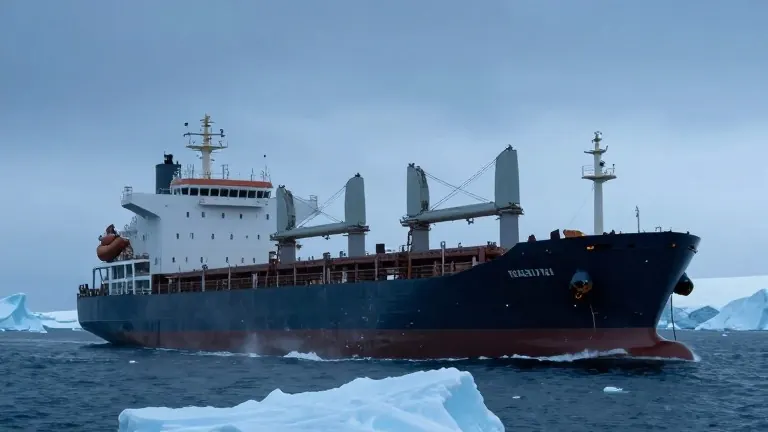
Moscow and Beijing have agreed to expand freight traffic and deepen cooperation on polar vessels along Arctic shipping corridors.
The announcement came last week, directly following the European Union's unveiling of a new Arctic strategy designed to counter growing Russian and Chinese influence in the area.
Analysts describe the region as a new geopolitical battleground, though they note Europe's ability to challenge the emerging partnership is limited. Moscow controls the Northern Sea Route, including shipping permits, transit fees, and a fleet of nuclear icebreakers. Beijing supplies the cargo, vessels, and industrial capacity required to develop the corridor.
David Roche, a strategist at Quantum Strategy & Geonomics, stated that the route's importance lies in the deepening economic dependence between the two nations. "The significance of the arctic route is for Russian energy shipments to China, which will increase China's control over Russia in terms of Russia's dependence on China to sell its energy to compensate for losses of its gas markets in Europe," Roche said.
Traffic on the route is increasing. Data from the Centre for High North Logistics shows 104 confirmed transit voyages carrying an estimated 3.7 million tonnes of cargo by the end of September 2026. This exceeds the 3.2 million tonnes recorded during the entire 2025 navigation season. In 2025, 37.02 million tonnes of cargo transited the Northern Sea Route, compared to 12.72 billion tonnes of global seaborne trade in 2024.
The EU strategy calls for expanding icebreaker capacity, strengthening maritime surveillance, and developing infrastructure linking Arctic trade to European markets. It also proposes a maritime security hub and greater protection for undersea cables. However, experts argue these measures may not overturn the structural advantages held by Moscow and Beijing. Europe faces a dilemma: engaging with the corridor could deepen reliance on Russian-controlled infrastructure.
Daeijin Lee, former global head of research at Fertmax FZCO, noted that Western operators face sanctions and insurance complications that make the route less attractive than it is for Chinese companies. "The Arctic gives diversification, not independence," Lee said. A study in the WMU Journal of Maritime Affairs projects that melting ice could increase the route's annual transit capacity to between 127 million and 463 million tonnes by 2050.
Source: CNBC