NHTSA Drafts Cyan Light Rule for Driverless Cars
Federal regulators propose a standardized blue-green marker to identify autonomous vehicles on the road.
By Rebecca Kaminski ·
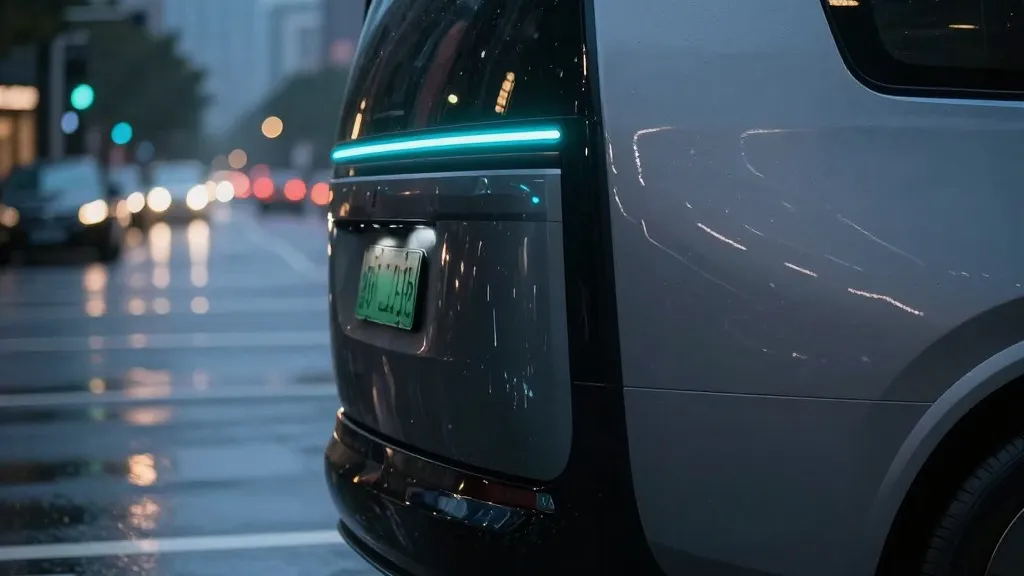
The National Highway Traffic Safety Administration (NHTSA) wants to solve a visual mystery on American roads with a single color. The agency has proposed a specific blue-green hue, known as cyan, to identify vehicles operating without a human driver. This new rule would standardize how robotaxis signal their status to pedestrians and other motorists.
The proposal appears in amended language for Federal Motor Vehicle Safety Standard No. 108. This standard currently controls vehicle lighting across the country. NHTSA aims to replace the current patchwork of local rules with a single federal requirement. The goal is to make it easier for manufacturers to build cars designed for autonomous operation.
The choice of cyan is deliberate. The auto industry already uses red, amber, and white for standard functions like braking and headlights. Flashing blue and red lights belong to emergency vehicles. NHTSA states that cyan fills a visual gap. The agency claims this color will "clearly and consistently signal to law enforcement and other road users when an automated driving system is operating the vehicle."
This is not the first time a manufacturer has experimented with colored lights. Mercedes-Benz previously received state-level approval for turquoise lights on its Level 3 Drive Pilot models. The automaker later dropped that specific approach. It now favors a different system called Level 2++. NHTSA wants to create a national standard that all companies can follow.
The new rule would apply to major players in the autonomous space. Companies like Waymo, Nuro, and Zoox are among the firms that could adopt the standard. Automakers including GM and Mercedes would also be covered. The proposal makes the cyan lights optional for manufacturers. If a company chooses to install them, however, it must follow strict federal guidelines for color, brightness, and placement.
NHTSA is also planning to remove outdated lighting requirements. Current rules mandate physical hazard switches and manual beam shifters inside the vehicle. These controls are designed for human drivers. The agency proposes to scrap those requirements for driverless vehicles. This move simplifies the design process for cars that may lack traditional interior controls.
The agency is updating its testing standards as well. NHTSA proposes changes to the 12.8-volt testing standard. This update allows manufacturers to build around modern LED systems. It removes administrative hurdles that have slowed down development. The agency is also considering dropping rules about the placement of high-beam and low-beam lights.
These changes fit into a larger Department of Transportation effort. The government wants to speed up the deployment of autonomous vehicles. It is working to make it easier for automakers to build cars without steering wheels or pedals. These traditional controls are currently required under federal standards.
Regulators are still enforcing the existing rules in the meantime. Last month, NHTSA opened an audit query into the Tesla Cybercab. The agency is examining the process and technical data Tesla used for certification. The concern centers on the absence of sideview mirrors, pedals, and a steering wheel. These features are currently required under federal standards.
Source: The Verge