Musk says Moon lander needs eight tankers, not 22
SpaceX CEO disputes a NASA safety panel's estimate, citing lower numbers based on future vehicle capabilities.
By Rebecca Kaminski ·
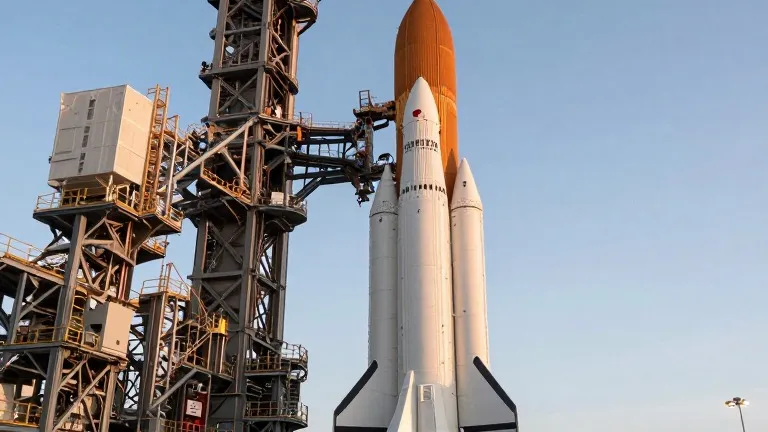
NASA is planning to send astronauts back to the Moon in 2028, but a disagreement has emerged over the logistics required to get them there. The conflict centers on how many rocket launches are necessary to fuel the landing vehicle.
During a quarterly public meeting on Thursday, the Aerospace Safety Advisory Panel identified lunar refueling as a key risk for the Artemis IV mission. Charlie Precourt, a panel member and former NASA astronaut, stated that the last estimate for fueling the lander was around 22 flights. "We need to keep our eyes on numerous required fuelings for the lander," Precourt said.
Elon Musk, CEO of SpaceX, responded directly to the panel's figure. After Ars Technica journalist Eric Berger shared Precourt's comments on X, Musk replied that the number was "way too high." Musk argued the actual requirement would be closer to 6 to 8 flights.
The discrepancy arises from the physical constraints of the Starship vehicle. Because the rocket consumes nearly all its propellant reaching Earth orbit, it must be refueled in space to travel to the Moon. SpaceX's proposed solution involves launching a storage depot first. Tanker Starships then fly individually to dock with the depot and transfer their remaining fuel. Once the depot is full, the lunar lander version of Starship launches, refuels, and departs for the Moon.
The total number of launches directly impacts the mission timeline and cost. Each tanker flight is a complete rocket launch, requiring time and resources. Eric Berger estimated that even if SpaceX achieves a rate of two launches per week by the end of 2027, filling a depot with 22 flights would take approximately three months. A lower count would shorten this window considerably.
The differing estimates rely on different assumptions about Starship performance. NASA's figure appears to be based on the vehicle's current lift capacity. Musk's lower range assumes a more capable version of the rocket. This debate is not new; in 2021, Musk rejected a government estimate of 16 launches, calling it "extremely unlikely" and predicting eight would be the maximum needed.
The final answer depends on hardware that has not yet been fully tested in flight. SpaceX plans to conduct refueling operations with its upgraded V3 Starship. Precourt noted that Artemis IV involves a "large number of firsts," while also praising NASA Administrator Jared Isaacman for working to clear obstacles for both SpaceX and Blue Origin.
Source: Teslarati