NASA's New Plan for Getting People to the Moon
The space agency has adjusted its approach for lunar landers and resolved a long-standing technical problem for its crew capsule.
By Fatima Popov ·
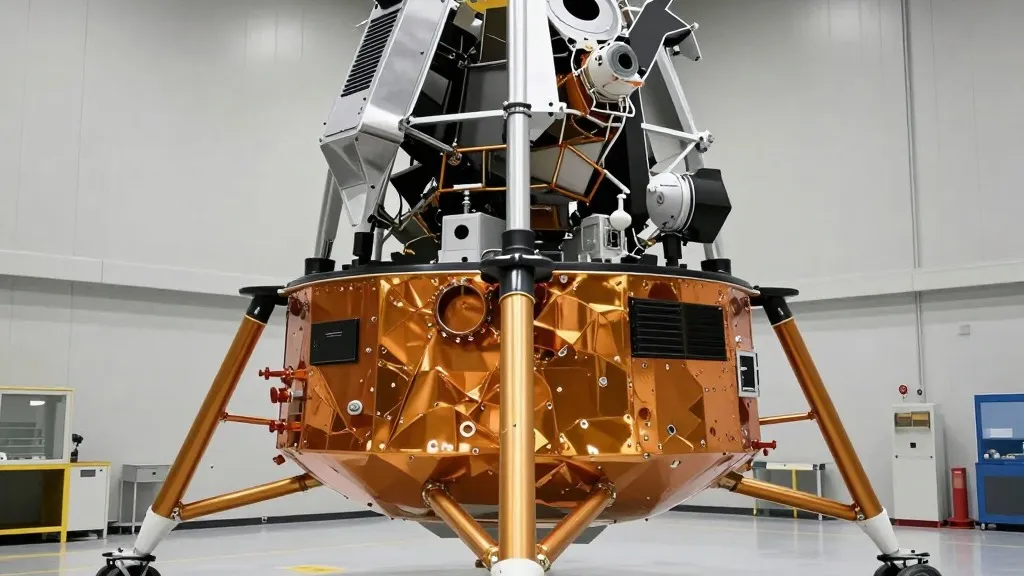
NASA is moving ahead with a detailed plan to put astronauts back on the Moon's surface, potentially as soon as 2028. In a news conference on Friday, October 23, the agency laid out its updated approach for the Artemis Program, detailing the specific steps it will take to build, launch, and land the spacecraft needed for these missions.
This new guidance marks the first time NASA has officially outlined these particular plans in public, and it acknowledges significant changes to the overall architecture of the program. The revisions are aimed at streamlining the process for the private companies building the lunar landers, helping them execute their plans more efficiently.
For missions using SpaceX's Starship vehicle, the new plan calls for a change in how the spacecraft will travel to the Moon. The Orion crew capsule will now first dock with the Starship lunar lander while both are in high-Earth orbit. From there, they would then transit together to the Moon. This is a notable shift from previous concepts that involved complex operations much farther from Earth.
For missions using Blue Origin's hardware, the plan outlines a four-launch sequence using the company's New Glenn rocket. Importantly, this revised architecture eliminates the need for any spacecraft-to-spacecraft refueling during the mission. The plan also includes a potential scenario where Blue Origin's Blue Moon lander could meet up with the Orion spacecraft in low-Lunar orbit.
On the question of a long-standing issue with the Orion spacecraft, NASA's cancellation of the Lunar Gateway project earlier this year has effectively resolved a major technical hurdle for SpaceX. Engineers with the company had previously asked to remove a requirement for docking with Orion in a specific orbit around the Moon, as it created significant challenges. With the Gateway station no longer part of the plan, that particular issue has been solved.
Looking at the schedule, NASA officials said they are continuing with their target for the Artemis III mission by summer 2027. This mission is planned as a demonstration flight that would involve docking with both the Blue Moon and Starship vehicles near Earth. Following that, the agency is still aiming for a 2028 launch of Artemis IV, which would be the mission that includes an actual landing on the lunar surface.
NASA Administrator Jared Isaacman expressed confidence in the agency's direction and its ability to meet these goals. "This is an achievable path we are on right now," Isaacman stated. "We have the mandate, we have the resources, and the support from our stakeholders to be able to execute, and that's what we intend to do."
While the new details provide a clear path forward for building the necessary hardware, the timeline remains ambitious. The success of these plans will depend on whether NASA and its partners can stick to the proposed schedule for Artemis III and Artemis IV.
Source: Ars Technica · original report published