Pope Leo's Visit to Montevideo Focuses on Neighborhoods Bearing the Brunt of a Violence Surge
The pontiff will visit Borro, where over 46% of the city's homicides occurred this year, turning the local parish into a center for survival and social housing.
By Fatima Popov ·
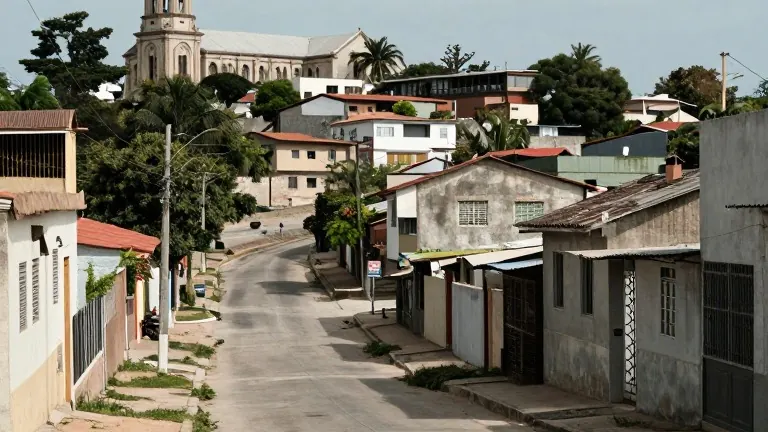
Residents of Borro, a neighborhood on the north side of Montevideo, are preparing for the arrival of Pope Leo XIV, who will visit the area as the violence affecting their daily lives intensifies. The 21-year-old trainee teacher Lucía Pintos described the environment where she works, noting that children often attend school specifically to receive lunch or an afternoon snack. She explained that families avoid sending children out for simple tasks like shopping due to the constant risk of gunfire.
Leo will arrive on Nov. 6 to begin a 17-day tour of Uruguay, Argentina, and Peru. He confirmed the trip despite a recent cancer diagnosis. His itinerary includes a stop at the Our Lady of Guadalupe Parish, which serves as a critical resource for the community. The parish operates by building homes, creating jobs, and assisting addicts in their recovery efforts. For many in Borro, the church acts as a fragile but necessary refuge from the spread of drug trafficking.
The physical environment in Borro reflects the strain on the area. Dirt roads descend toward a stream, and mud frequently seeps into nearby houses. A concrete road has been constructed to accommodate the papal visit. Narrow streets converge on a soccer field restored by the parish, where young player Lautaro Martínez usually practices. Training has been suspended recently as a precaution following new incidents of shooting.
Rev. Pablo Coimbra, the head of the parish, stated that families know specific times when they must go inside and stay on the ground during bursts of machine-gun fire. He noted that stray bullets can hit anyone, and the sound of territorial disputes between drug dealers is a constant reality. The government has responded to these concerns by beginning patrols with armored vehicles originally donated by the United States for U.N. peacekeeping missions.
Archbishop Daniel Sturla of Montevideo toured the neighborhood with reporters after receiving a Vatican delegation. He stated that Borro has a stronger Catholic presence than any other area in the country. Official counts show that 98 homicides were registered in Montevideo through September, a 13.5% increase compared to the same period last year. More than 46% of those homicides occurred in Borro and its surrounding neighborhoods. Uruguay maintains a relatively low homicide rate for the region, with about 10 homicides per 100,000 people in 2025.
Interior Minister Carlos Negro declared in October 2025 that the country faced epidemic homicide rates and vowed to reduce them. In response to the housing crisis and crime, the parish is leading a social housing project. Residents are constructing more than 100 units with sanitation systems, an effort that generates local employment. Coimbra said the church’s presence helps distinguish between drug use and nonuse, and between continuing education and dropping out.
The parish also serves as a medical point of contact, with neighbors bringing the wounded there because ambulances only go as far as the church entrance. Coimbra said gangs previously expelled families at gunpoint to set up drug dens, forcing them to seek shelter in the parish. On Mondays, the parish holds a Mass for homeless people, drawing dozens from across the city. Coimbra observed that attendees come for the bathroom and two meals, but mainly to be heard.
Many young people in the area find solace in faith while trying to leave lives of crime. Data from the Catholic Church indicates that in 2025, only 2,200 of the 30,000 newborns in Uruguay were baptized. During Holy Communion at the parish, many attendees remain with their arms crossed, a sign that they have not been baptized. Pablo Acosta, 28, was born in the neighborhood and became involved in crime. He now works informally in local markets and sends money to his 10-year-old son, whom he does not see due to his addictions.
Acosta, who has a gunshot wound in his stomach and stab wounds, said he has been trying to quit using drugs for the past month. He attributed his injuries to owing money and being involved in situations where he should not have been. Coimbra said the church’s task is to extend a hand to those who have strayed and prevent youth from taking that path. He noted that young people often lack opportunities such as clubs, English classes, or rugby, leading to idleness that the parish seeks to address.
Source: Greenwich Time