Moscow Airports Face Daily Groundings Amid Drone Raids
Ukrainian strikes have forced Russian hubs to suspend operations for up to nine hours, disrupting travel and raising safety concerns for civilian flights.
By Rebecca Kaminski ·
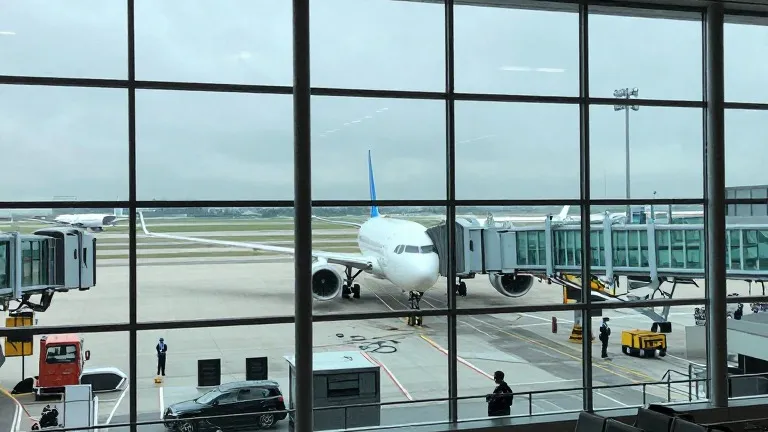
Moscow’s four major airports have been grounded for up to nine hours a day in October, a disruption that has become a daily reality for travelers. The closures stem from Ukrainian drone strikes that target Russian airspace, forcing Russian authorities to shut down operations almost every day this month. This pattern follows a specific directive from Ukrainian President Volodymyr Zelenskyy, who stated in early September that Russia would make its airspace completely unsafe for international carriers.
The immediate cause of the shutdowns is a safety measure used by Rosaviatsiya, the Russian aviation authority. The protocol, often called the carpet rule, mandates that airspace closes if an aircraft violates borders, weapons are used, or unidentified objects appear in the sky. Oleksandr Laneckij, the chief executive of Friendly Avia Support, explained that every drone presents a military threat. He compared the current situation to the disruptions caused by Yemen’s Houthis, noting that Ukraine’s military capabilities far exceed those of the group.
Military analyst Jan Matvejev observed that Ukraine can severely disrupt air traffic around Moscow without fully closing all Russian airspace. He noted that simple drones, even those without warheads, are enough to trigger the closure protocol. Ukraine’s industry currently produces hundreds of combat-ready long-range drones daily. Simon Shuster wrote in The Atlantic that these efforts are just getting started, citing sources familiar with the operation.
Experts warn that the current defense methods pose risks to civilian aircraft. Matvejev argued that Russian air defenses are not fully effective, stating that if it were easy to shoot the drones down, Russia would have done so by now. He suggested that Russia would have deployed more troops if it had them. The risk is compounded by the fact that missiles used to intercept drones can have production defects that send them toward nearby airliners.
The danger was highlighted by the crash of an Azerbaijan Airlines flight on Christmas Day 2024. Investigators determined that the aircraft was hit by a Russian air-defense missile fired to counter drones, killing 38 people. Matvejev said little has changed in the protocol since that incident. While machine guns pose low risks to aircraft, missiles present a greater hazard due to their size and speed. Even a collision with a drone weighing dozens of kilograms can cause serious damage to an airplane.
The disruption has already spread beyond Moscow. Ukrainian forces attacked Pskov airport in the summer of 2023, and drone debris fell on Sochi airport earlier this month. Russia has also struck Ukrainian airports, with Zelenskyy confirming hits on Kyiv and Boryspil in September. The impact on the industry is growing as competition shrinks. Many airlines have gone out of business, increasing demand for seats on the remaining foreign carriers.
Laneckij said foreign airlines will decide whether to keep flying based on military threat, demand, and insurance costs. If insurers rate the risk as high, premiums will rise, pushing ticket prices up. He noted that the decision to stay or leave depends on the price carriers are willing to pay for the danger they face.
Source: Deutsche Welle
More Business · World news · Scam Watch · Report a business · Got a Story?