Federal Chips Grant: Commonwealth Fusion Systems Secures $85 Million for Nuclear Hardware
The Department of Commerce is providing substantial funding to Commonwealth Fusion Systems to advance semiconductor technology essential for future fusion power plants.
By Rebecca Kaminski ·
The U.S. government is committing $85 million to a fusion energy startup in a move that underscores the critical role of semiconductors in the next generation of power generation. Commonwealth Fusion Systems announced on Thursday that it has received this federal award, marking a significant investment in the hardware required to make commercial fusion viable. This financial support is not merely a grant for research but a strategic allocation of resources designed to bridge the gap between experimental physics and industrial-scale manufacturing.
The funding is part of the broader CHIPS Act framework administered by the Department of Commerce. In addition to the cash injection, the agreement grants the federal government a financial stake in the company. This dual approach aims to de-risk private investment while ensuring that domestic manufacturing capabilities for high-performance chips continue to grow. By tying federal equity to the award, Washington is signaling a long-term commitment to keeping advanced semiconductor development within the United States.
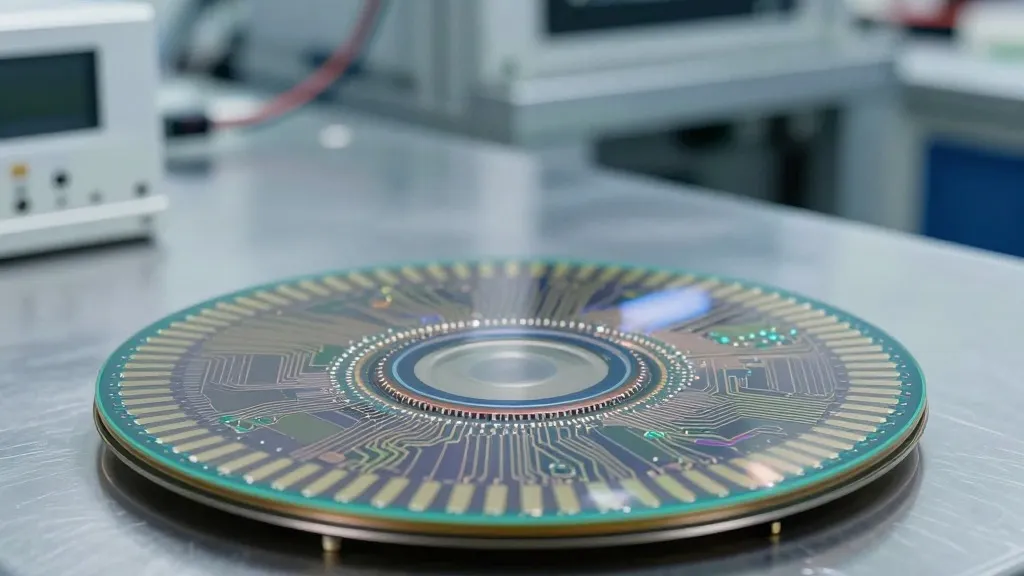
A primary focus of the investment is the advancement of silicon carbide power electronics. These specific semiconductors are already vital in managing high voltages across various industries, including electric vehicles, data centers, and telecommunications infrastructure. In the context of fusion energy, their role becomes even more critical. They handle the intense electrical bursts necessary to drive the superconducting magnets that confine plasma within a reactor. Improving these components is essential for scaling up from single experimental units to a network of commercial power plants.
The company has outlined five distinct initiatives that will benefit from the new capital. Beyond silicon carbide, Commonwealth Fusion Systems plans to develop next-generation radio-frequency power generators. These devices are responsible for heating the fusion fuel to the temperatures required for nuclear reactions to occur. Additionally, the team is working on advanced electronics that allow for faster reactor control. These components are being hardened against radiation exposure, a design choice intended to extend the operational lifespan of internal hardware and thereby reduce long-term operating costs for utility providers.
The final initiative involves adapting existing artificial intelligence hardware for power plant applications. Specifically, the company is looking at how GPUs and TPUs can be utilized within the fusion environment. This move reflects a broader trend in the energy sector where data processing and real-time control are becoming increasingly important for optimizing efficiency. By integrating AI hardware, Commonwealth Fusion Systems aims to create a more responsive and intelligent power generation system.
Brandon Sorbom, the co-founder and chief science officer at the company, emphasized the dual benefit of the award in a recent blog post. He noted that the funding would help improve the U.S. chip and power electronics industries while simultaneously accelerating the progress of fusion energy toward the electrical grid. The goal is to create a more capable and economical power plant, supported by a stronger domestic supply chain that can reliably produce the necessary components.
The timing of this award is significant as several fusion startups race to complete their first demonstration machines. Commonwealth Fusion Systems is targeting the activation of its Sparc reactor sometime next year. While a single working reactor serves as a crucial proof of concept, the commercial viability of fusion depends on the ability to build dozens of such plants. This requires a robust and durable supply chain for power electronics, which is currently a bottleneck for the industry.
This federal support highlights a shift in how energy policy intersects with technology policy. By investing in the semiconductors that power fusion reactors, the government is addressing a foundational challenge in the energy transition. The $85 million award is a step toward ensuring that the United States has the technological backbone to support a future where fusion energy plays a central role in the national grid. The outcome will depend on whether these advanced chips can be manufactured at scale and cost-effectiveness in the coming years.
Source: TechCrunch