Borderlands Become Major Opium Source as Pakistan Cultivation Hits 9,000 Hectares
Satellite data and farmer interviews show opium production shifting from Afghanistan into Balochistan and Iran following the 2022 Taliban ban.
By Daniel Rogers ·
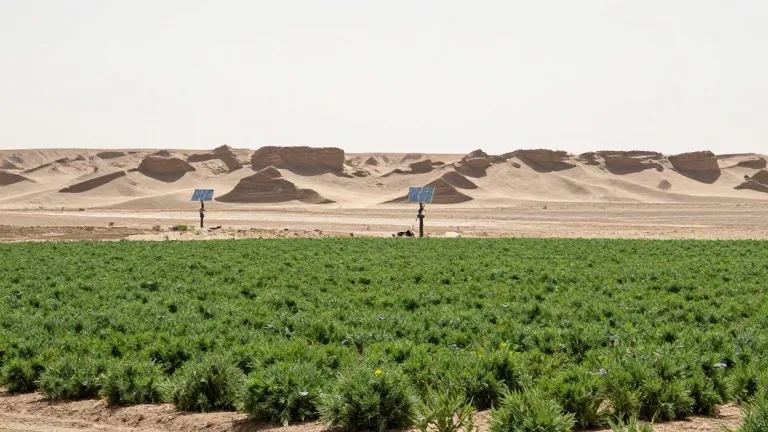
New satellite imagery reveals that more than 9,000 hectares of poppy fields now exist in Pakistan’s Balochistan province. This expansion marks a major shift in global opium production away from Afghanistan, where the Taliban has enforced a strict ban since 2022. The data, compiled by the British firm Alcis in an August report, indicates that cultivation is concentrated in the districts of Loralai and Killa Abdullah. David Mansfield, a UK-based expert on Afghanistan’s illicit drugs industry, stated that the remote tri-border area has effectively become a global center for opium production.
The move into Pakistan is driven by Afghan farmers from Kandahar and Helmand crossing the border to lease land. These growers bring capital and technical knowledge, investing in infrastructure such as solar-powered wells. They share profits with local landowners while utilizing the region’s climate to harvest poppies twice a year. Many farmers doubled their cultivated area in 2026, a trend Mansfield described as a stark indication that output will rise further in 2027.
Local officials in Balochistan, Pakistan’s poorest province, have largely denied the scale of the operation. Islamabad insists that any poppy crops found have been destroyed. However, Alcis imagery from 2026 shows no clear evidence of eradication. Abdul Qahar Wadan, a former National Assembly member from Killa Abdullah, claimed that cultivation is rampant and backed by senior military officials. He alleged that these figures take commissions from growers. Monawar Hussain, the district’s chief administrative officer, rejected this claim, stating that cultivation declined after an eradication campaign last year.
Farmers in the region cite economic pressures as the primary driver for the switch to opium. Lala Jan Kakar, a resident of Killa Abdullah, noted that drought and flash floods have devastated traditional fruit farming. He said the income from poppies far exceeds that from fruits, making the crop difficult to resist. One anonymous farmer alleged that growers pay bribes to local authorities through intermediaries. He claimed that when media attention increases, growers sometimes plant poppies on barren land so officials can destroy the crop and publicize the effort.
A similar pattern is occurring in Iran’s Sistan-Baluchistan province, which borders Afghanistan. Afghan farmers work there as tenants and sharecroppers, often relying on family ties. Satellite imagery shows extensive fields in the region, some equipped with drip irrigation. This costly investment suggests growers expected little risk of eradication. Iranian authorities have been preoccupied with the war against the United States and Israel since late February, leaving them unable or unwilling to destroy the 2026 crop.
Inside Afghanistan, production is also rebounding despite the ban. Cultivation is concentrated in northeastern Badakhshan province, which accounts for roughly half of the national output. Mansfield reported that southwestern cultivation almost doubled between 2025 and 2026, though it remained limited and concealed within wheat fields. Farmers in Badakhshan and Helmand have protested and defied the ban due to drought and debt.
The expansion of poppy monoculture is altering the regional agricultural economy. Mansfield noted that farmers are moving away from mixed farming to large-scale poppy crops in Pakistan and Iran. This shift is linked to rising violence in the borderlands, where armed groups compete for tax revenues from the drugs trade. The Taliban’s recent directive barring home searches for poppy without a court order is seen as a concession to avoid unrest, though experts warn it may encourage further expansion in 2027.
Source: RFE/RL