Ukraine Restores Full Satellite Speeds for Military Drones
President Zelenskyy announced on October 24 that Starshield links have returned to 400 km/h, ending a two-week disruption that hindered air defense efforts.
By Fatima Popov ·
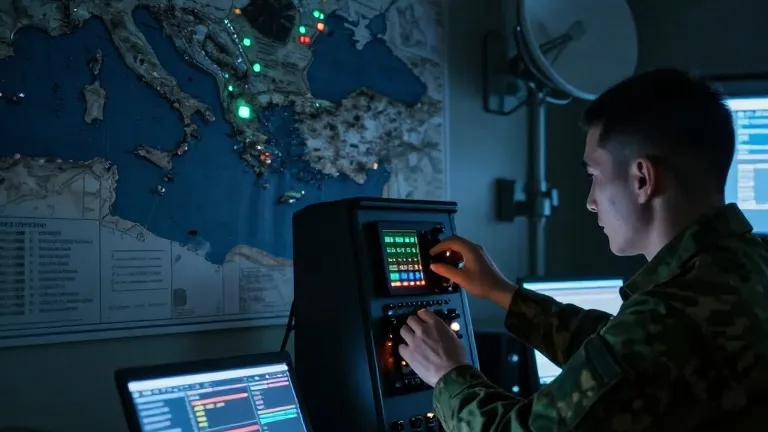
Ukrainian President Volodymyr Zelenskyy stated on October 24 that the Starshield satellite communications system has resumed full operational speed. This development ends a nearly two-week period of restrictions that limited connectivity for military equipment. Zelenskyy described the restoration as vital for frontline logistics and for countering jet-powered Shahed drones.
Defense Minister Yevheniy Khmara confirmed that Kyiv’s monitoring systems recorded restored connectivity on assets moving faster than 400 kilometers per hour, which equates to 250 miles per hour. Prior to this restoration, a Ukrainian official indicated that satellite links were dropping at approximately 161 kilometers per hour, or 100 miles per hour. That speed limitation sharply reduced the effectiveness of Ukraine’s air defense capabilities.
Starshield is a military-focused service developed by Elon Musk’s SpaceX, which complements the company’s commercial Starlink network. Ukraine relies heavily on both systems for its operations. Khmara attributed the resolution to direct dialogue and the persistent stance of the Ukrainian president. He noted that the restored speeds allow drone interceptors and other equipment to maintain stable connections at higher velocities.
The specific party that imposed the initial limits remains unconfirmed. Serhiy Beskrestnov, a defense technology adviser to Zelenskyy, suggested a connection to recent tensions between Kyiv and Washington, though no direct link has been established. The Trump administration denies that the president or any member of the US government requested the changes. Musk has stated that the government controls Starshield, with decisions regarding speed and usage made by the military and ultimately by President Donald Trump.
The Wall Street Journal reported earlier in the week that Trump spoke with Musk to urge the lifting of restrictions. Following that conversation, communications became more reliable. Trump declined to comment specifically on the incident but stated that if there is a problem, he will get it straightened out. Lawmakers from both Democratic and Republican parties in Congress have requested details on who authorized the changes and have sought guarantees of reliable access for Ukraine.
The initial reports of limited access emerged amid broader concerns in Ukraine regarding other US policy moves. In the past two weeks, Trump announced a deal encouraging Russian diesel exports and waived sanctions that were scheduled to take effect under a law he signed last month. He also urged Kyiv to pause attacks on Russian oil refineries, attributing high diesel prices to those strikes rather than to reduced energy flows from the Middle East during the US-Israeli war with Iran. Zelenskyy initially appeared open to a pause but declared Kyiv was done with unilateral pauses after Putin ordered continued strikes on Ukraine.
Military exchanges continued through the night. Ukraine’s air defense forces reported shooting down 100 of the 130 drones launched by Russia. Attacks on 15 locations resulted in at least two deaths. Ukraine’s General Staff said its forces struck two industrial facilities and a military airport in Russia. One facility in Oryol, located about 350 kilometers southwest of Moscow, produces components for cruise and ballistic missiles. The other facility in Togliatti, in the Samara region, manufactures rubber products used as a key component of solid rocket fuel.
Most of Russia-occupied Crimea lost electricity in the early hours of October 24, affecting Simferopol, Sevastopol, Yalta, Kerch, and Feodosia. NetBlocks recorded an almost complete loss of connectivity in the region. Russian-installed authorities stated that mobile service reached only 40 percent of the area. Public electric transport was suspended in Sevastopol, and water arrived at low pressure sporadically. Sergei Aksyonov, the Russian-appointed head of the occupation administration, blamed the disruption on a drone attack that damaged main power lines outside Crimea. Ukraine has not commented, and the cause has not been independently confirmed, though Ukrainian monitoring channels reported a fire at the Taman electrical substation in Russia’s Krasnodar region.
Source: RFE/RL