
Tibet Seismic Event: Magnitude 7 Quake Levels Homes
A powerful tremor struck northern China this week, resulting in fatalities and significant infrastructure damage near the city of Nagqu.
By Daniel Rogers ·
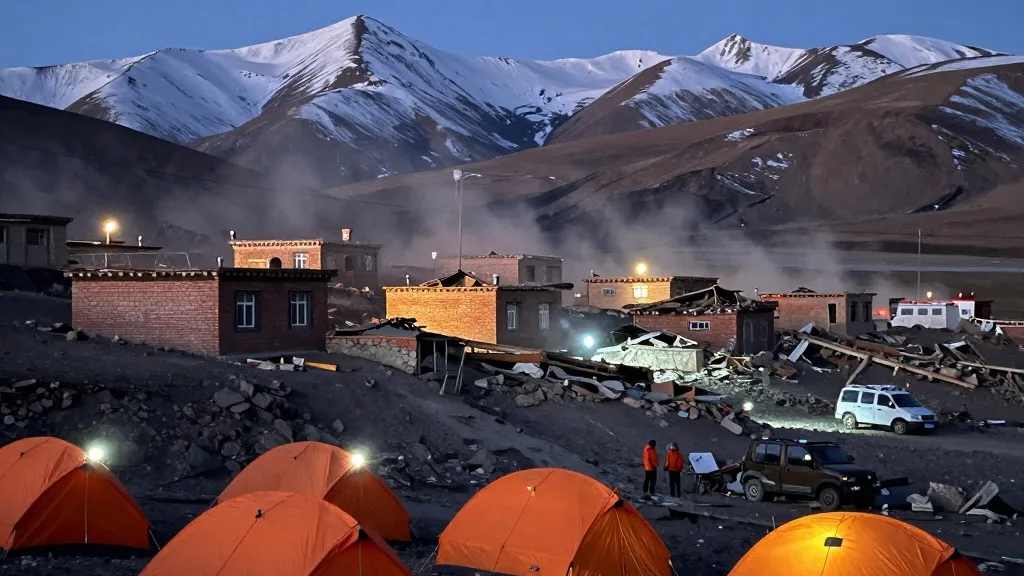
A devastating magnitude 7 earthquake ripped through China's Tibet region on Thursday evening, leaving at least 16 people dead and hundreds of structures in ruins. The seismic event caused widespread destruction in the northern part of the autonomous region, with the city of Nagqu bearing the brunt of the impact. According to official media reports, the shaking was strong enough to collapse hundreds of residences and disrupt local infrastructure across a wide area. The disaster has triggered a massive rescue effort as authorities work to locate survivors and stabilize the affected zones. This incident marks a significant seismic event for the area, shaking a region known for its high altitude and sparse population density.
Local officials from the Nagqu media office confirmed that at least 339 homes and 20 livestock sheds had completely fallen. Among the 46 individuals reported injured, 11 are in serious condition, while the other 35 sustained minor wounds. Search and rescue teams remain active in the area, continuing their efforts to comb through the rubble. The scale of the damage has necessitated a large-scale mobilization of local resources to ensure all potential victims are accounted for and the structural integrity of remaining buildings is assessed.
To support the ongoing relief operations, more than 1,600 personnel from the local county have been dispatched to the site. A steady flow of aid has also arrived in the region, bringing critical supplies to the affected population. These deliveries include 1,000 prefabricated housing units, approximately 3,000 tents and folding beds, as well as flashlights and winter clothing. The provision of temporary shelter and essential gear is vital given the remote nature of the location and the immediate need for residents to leave damaged dwellings.
Communication networks have been partially disrupted in the affected zone, complicating coordination efforts. China's official news agency, Xinhua, reported on Friday that local railway authorities implemented emergency protocols to halt train traffic through the damaged areas. Additionally, the tremor triggered rockfalls that forced the closure of a segment of National Highway 317. Currently, only emergency, rescue, and official support vehicles are permitted to pass through the restricted section while crews work to clear the debris from the roadway.
Weather conditions are expected to add complexity to the rescue and recovery work in the coming days. Xinhua noted that intermittent snow is forecasted across the earthquake zone over the next three days. This weather pattern may slow down operations and pose additional challenges for rescue teams and displaced residents. The combination of cold temperatures and potential precipitation requires careful planning to ensure the safety of both responders and those in temporary shelters.
CCTV, China's national broadcaster, identified this as the largest earthquake to hit the region in the past five years. The U.S. Geological Survey provided specific data on the event, noting it occurred at 10:33 p.m. local time at a depth of 18 kilometers. The epicenter was located 191 kilometers east-northeast of Nagqu, in a sparsely populated, high-altitude section of northern Tibet. For geographical context, Nagqu is situated more than 300 kilometers north of Lhasa, the capital of Tibet.
As the immediate aftermath settles, the focus remains on the long-term recovery of the area. The combination of structural damage, logistical challenges, and weather forecasts suggests a prolonged effort will be required to restore normalcy. Authorities continue to monitor the situation closely, adjusting rescue strategies as new information emerges from the field. The resilience of the local population and the rapid deployment of aid highlight the critical infrastructure in place to handle such natural disasters in remote regions.
Source: CBC News