Tesla Targets Late 2027 for Optimus Robot Sales After Acknowledging Hardware Hurdles
The automaker’s CEO indicated that durability issues with the robot’s hands and AI limitations have pushed external deliveries back, despite rivals like XPeng and Boston Dynamics maintaining aggressive production schedules.
By Isabella Morales ·
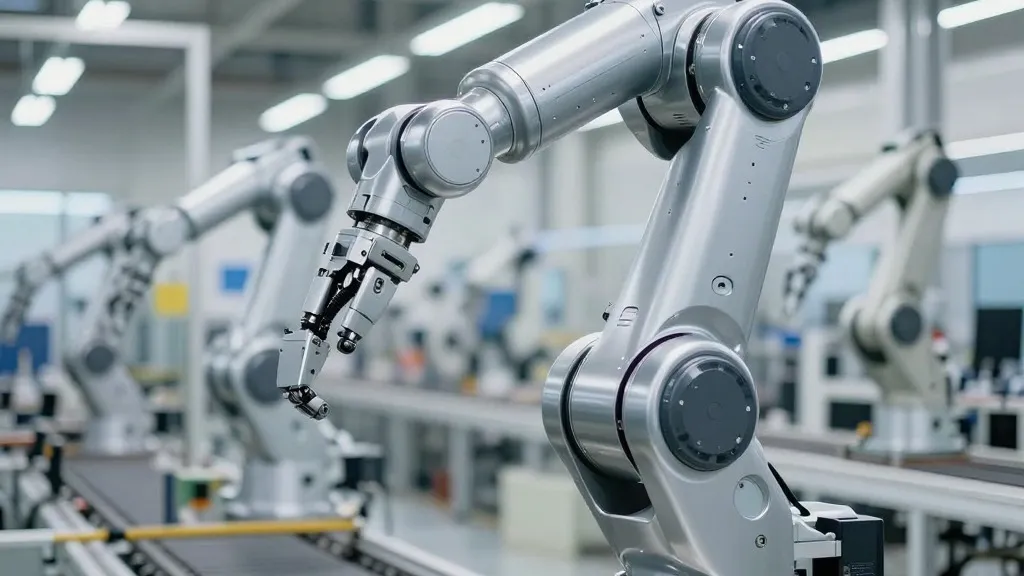
Tesla has officially reset its timeline for selling humanoid robots to outside businesses, with CEO Elon Musk stating that external deliveries of the Optimus unit are now expected around the end of 2027. During the company’s Q3 2026 earnings call, Musk identified specific technical bottlenecks that must be resolved before the machines can leave the factory, citing significant work still required on the robot’s hands, overall durability, and artificial intelligence capabilities.
These challenges mirror the primary obstacles facing the entire humanoid robotics sector. Although Musk asserted that no competitor is close to matching Tesla’s progress, industry peers such as XPeng and Hyundai’s Boston Dynamics appear to be on comparable or slightly more advanced trajectories. This suggests that Tesla’s lead in the general-purpose robot market may be narrower than previously perceived by investors.
Tesla has initiated early production of the Optimus at its Fremont facility, utilizing the high-volume line formerly dedicated to the Model S and Model X. The infrastructure is largely in place for a theoretical capacity of one million units annually, or roughly 20,000 per week. However, Musk cautioned that reaching this volume will take at least a year, possibly longer, as key design elements remain in flux.
The most critical hardware issue appears to be the robot’s hand. A Tesla Optimus engineer noted during the call that the fingers face a difficult engineering trade-off: they must be soft enough to handle delicate objects yet tough enough to withstand constant wear. Unlike human skin, the robot’s components cannot heal from friction and damage. Alongside the hands, custom gears present reliability concerns that are currently being addressed.
On the software front, Tesla is grappling with AI architecture issues. Unlike its vehicle fleet, which continuously gathers data for Full Self-Driving, Tesla lacks a large network of robots to collect operational data. To remedy this, the company plans to build 10,000 to 20,000 units for an internal training program dubbed the Optimus Academy. Additionally, the AI5 chip is slated for integration into the Optimus around April 2027.
Musk promised a video within the next one or two months demonstrating the robot performing unscripted tasks, a move intended to counter the perception that many industry demos rely on pre-programmed routines. He emphasized that the AI must generalize to new environments, a capability that has previously proven difficult for the robots to master without extensive retraining.
The latest update comes after a period of shifting timelines. In 2024, Musk projected high-volume external sales for 2026, and in early 2025, he predicted that several thousand units would be doing useful work by year’s end. Those targets were not met, and the company’s own Q3 shareholder letter described the current Fremont output as the first "production-quality" bots, implying that previous units did not meet that standard.
Competitors are making steady progress despite their own delays. XPeng activated an automated production line for its IRON robot in Guangzhou in September, with a goal of mass production by the end of 2026 and deliveries starting in the first half of 2027. Meanwhile, Boston Dynamics has already begun deploying its electric Atlas robot in automotive plants, with all 2026 deployments committed to clients including Google DeepMind. Boston Dynamics has also hired Milan Kovac, Tesla’s former head of Optimus, signaling a shift in talent within the industry.
While Tesla may produce the highest volume of robots, the primary challenge for all manufacturers is ensuring the machines are reliable and useful in real-world conditions. The coming months will be crucial for Tesla to validate its new late-2027 target, particularly as it seeks to prove that its Optimus can perform unscripted industrial tasks effectively.
Source: Electrek