Swiss Diplomat's Wife Tests Positive for Ebola in Nigeria
Nigeria confirms its first case in over a decade, triggering a dispute over the patient's travel route and the outbreak's geographic reach.
By Daniel Rogers ·
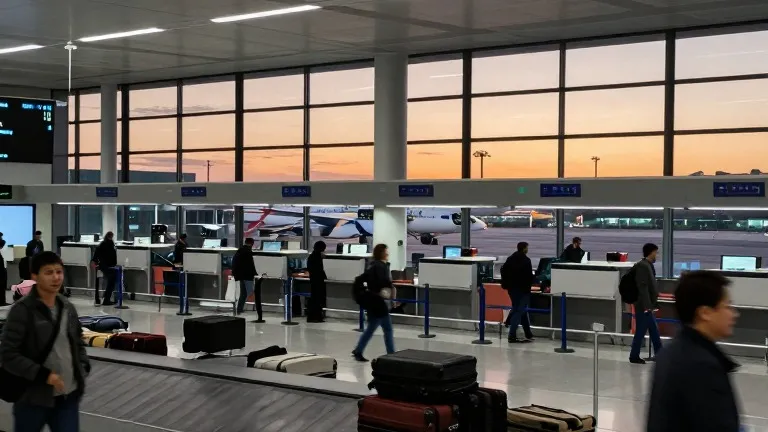
Nigeria has confirmed its first Ebola case in more than ten years.
The patient is the Ugandan-born wife of a Swiss diplomat posted in Abuja. The Swiss foreign ministry announced the diagnosis on Friday. It stated that the woman had not visited the Democratic Republic of Congo, where the current outbreak began in mid-May. The ministry said she likely contracted the virus while traveling with her husband in Uganda.
This account differs from earlier reports from Uganda. A Ugandan government spokesperson told Reuters on Thursday that the country had no active Ebola cases. The spokesperson said the woman had traveled to eastern DR Congo. The discrepancy has raised questions about how officials are tracking the spread of the disease.
The World Health Organization says investigations into the source of the infection are ongoing. Catherine Smallwood, a WHO Ebola incident manager in DR Congo, spoke to a UN briefing in Geneva via video link. She said WHO staff in DR Congo had no information suggesting the patient had traveled to that country. The Africa Centres for Disease Control and Prevention is examining a potential link to a case in Kenya. Dr. Wessam Mankoula, the organization's head of emergency preparedness and response, noted that both the Nigerian patient and the Kenyan patient passed through Uganda's Entebbe airport on October 3.
Smallwood said a connection to the Kenyan case was possible. She added that officials needed to compare the timing with the onset of the Nigerian patient's symptoms to determine if the infection happened at the airport or elsewhere. Marion Koopmans, a Dutch virologist on the WHO Ebola emergency committee, expressed doubt about the airport theory. She called it very speculative without evidence of shared space. She stated that random presence at a large airport is not a supported epidemiological link.
Muhammad Ali Pate, Nigeria's health minister, said the case remains contained. He stated that contact tracing is continuing. He said, We are trying to contain it so it doesn't go out to the communities. Melaku Yirga, vice-president for Africa at Prosper Global, said the confirmed cases in Kenya and Nigeria show that countries must work closely together. He emphasized the need for speed and cross-border information sharing.
The outbreak is caused by the Bundibugyo virus. There is no approved treatment or vaccine for this strain. First announced on May 15, the outbreak has infected more than 9,500 people. Nearly half of those infected have died. It is the largest and deadliest outbreak in DR Congo history. It ranks as the second largest globally, behind the 2014-2016 West Africa epidemic, which infected more than 28,600 people and killed more than 11,000.
Source: The Guardian