Front-line drones regain 250 mph capability after week of satellite throttling
Defense officials confirm that Starlink and Starshield connections have returned to full speed, resolving a disruption that hampered Ukrainian military operations for seven days.
By Rebecca Kaminski ·
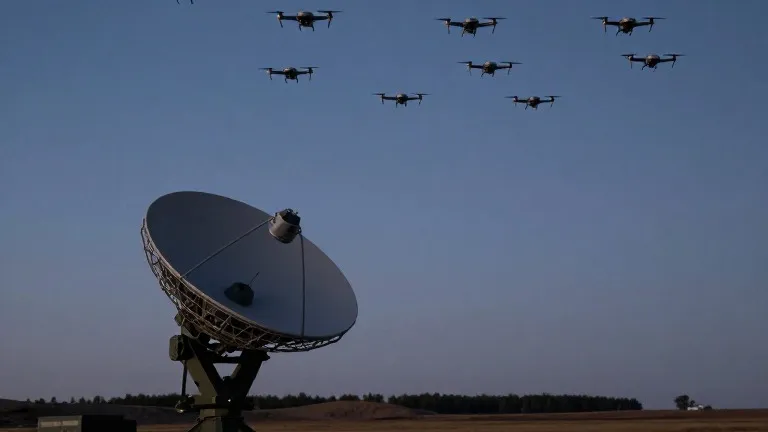
Ukrainian forces have recovered full control over their satellite-linked drone networks, ending a week of operational constraints that military leaders described as disruptive to front-line missions. Defense Minister Yevhenii Khmara announced on Saturday that the service limits imposed on Starlink and Starshield connections have been lifted.
The restoration allows drones and other fast-moving equipment to operate at speeds exceeding 250 mph. Khmara stated that the Defense Ministry’s monitoring systems confirmed stable connections for objects moving at that velocity. President Volodymyr Zelenskyy verified that both commercial Starlink and military-grade Starshield systems were functioning at the required speeds.
Zelenskyy noted that the restoration began in the early morning hours, providing immediate relief to military logistics. "Now the speed is what we need," Zelenskyy said. "The restoration began last night, and in the morning there were already speeds sufficient to use this connection. This is very important." The full bandwidth is critical for managing front-line supplies and for intercepting reactive Shahed drones, the Iranian-made aircraft that Russia frequently launches.
During the previous week of restrictions, Ukrainian commanders reported the loss of drones and the interruption of planned missions. The speed caps created uncertainty for units relying on satellite internet for real-time data and control, straining the relationship between Kyiv and Washington.
This technical resolution arrives as diplomatic efforts intensify. U.S. envoys are pushing for a conclusion to the war, with Russia agreeing on Wednesday to resume three-way negotiations with the United States and Ukraine next month. On Friday, Kyiv and Moscow also agreed to a localized ceasefire around Oleshky, a Russian-occupied town in the Kherson region. The truce was brokered by First Lady Melania Trump.
The satellite incident added to existing tensions between the two governments. The relationship had already been strained by a reported deal between President Donald Trump and Moscow regarding Russian diesel imports, a move Ukraine viewed as a betrayal. Khmara attributed the resolution to direct dialogue and Zelenskyy’s diplomacy with Washington.
Khmara emphasized that the fix mattered most for the military's drone work, logistics, and communications. Zelenskyy thanked American partners for taking the issue seriously. Questions remain regarding who ordered the interruptions to the system built by Elon Musk’s SpaceX. Trump has maintained that he did not make the decision, while also stating that Musk should not be held responsible.
Elon Musk’s company has been a cornerstone of Ukraine’s defense infrastructure for years, providing the connectivity needed to counter Russian attacks. The return to full speed marks a return to the operational baseline that Ukrainian forces have depended on since the start of the conflict.
Source: CBS News