25 Years Ago, Apple Put 1,000 Songs in a Deck of Cards
The original iPod marked a pivotal moment in personal tech, offering unprecedented storage and speed in a pocket-sized device.
By Daniel Rogers ·
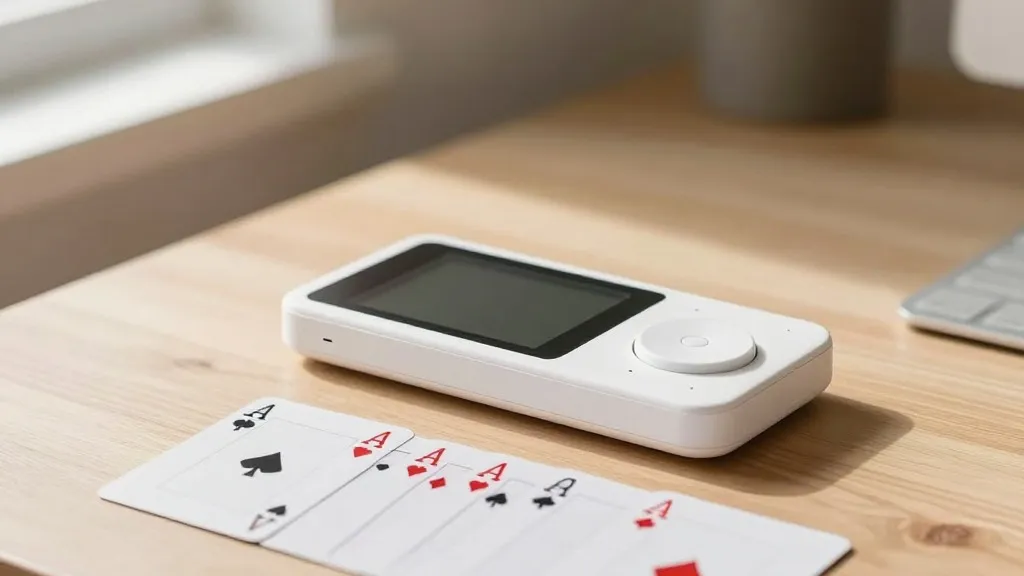
On this day in 2001, Apple introduced a device that would redefine how consumers interacted with digital music. The original iPod launched with a price tag of $399 and a headline feature: the ability to store 1,000 songs in a package no larger than a deck of cards. This announcement came as a significant shift for the industry, promising to put an entire music library into a user's pocket for the first time.
The launch occurred during a critical period for Apple. CEO Steve Jobs had successfully guided the company past the beige computer era into the Mac OS X period, with products like the iBook and iMac gaining strong consumer traction. This resurgence happened shortly after the dot-com bubble burst, a time when many technology companies were struggling. Jobs envisioned the Mac as the center of a user's digital lifestyle, acting as a hub for cameras, camcorders, DVD players, and now, portable music players.
At the time, the portable music market was fragmented. Companies like Creative, Sonic Blue, and Sony offered various solutions, including CD players, MP3 CD players, flash players, and hard disk-based jukeboxes. Jobs acknowledged these competitors but argued that none had found the right recipe for digital music. He identified the hard disk-based player as the optimal entry point for Apple, given the massive target market that everyone loves music.
The device itself was an MP3 player capable of handling MP3, WAV, and AIFF formats with CD-quality sound. Its 5GB storage capacity was the key differentiator. Specifically, this allowed for 1,000 typical pop songs at 160Kbps. Jobs described this capacity as covering the entire music library for most people. The compact size was made possible by a Toshiba 1.8-inch hard drive that was just 0.2 inches thick, resulting in a device measuring 2.4 by 4 by 0.78 inches and weighing 6.5 ounces, which was lighter than most cell phones of the era.
Speed was another major selling point. The iPod featured a FireWire 400 connection, which was marketed as the first and only music player to use this technology. Jobs claimed that transferring an entire CD to the device took only five to 10 seconds, compared to about five minutes for a standard USB connection. Filling the device with 1,000 songs would take roughly 10 minutes, whereas a USB-based player would require five hours. The device also included 20 minutes of skip protection and a rechargeable lithium-polymer battery that provided 10 hours of playback and could recharge to 80 percent in one hour.
Design and usability were central to the presentation. Jobs highlighted the minimal, durable construction and the single-hand friendly controls. A piezoelectric clicker provided tactile feedback for the scroll wheel, allowing users to quickly navigate by playlist, artist, or song. The first song demoed on stage was Building a Mystery by Sarah MacLachlan. The device also doubled as a FireWire hard disk drive.
The launch was paired with the release of iTunes 2, which introduced features like MP3 CD burning and syncing support. The Auto-Sync feature ensured that libraries curated on a Mac would always match the pocket player when connected. This integration solidified the relationship between the computer and the portable device.
The first iPhone did not arrive until early 2007, more than five years later. For over a decade, the iPod and iPhone coexisted in Apple's product lineup. However, the iPod's relevance gradually declined as smartphones matured. The final model, the 7th-generation iPod Touch, was released in May 2019. Although the line was left unmaintained after that, it was not officially discontinued until May 2022.
Source: Tom's Hardware · original report published